Rebuilding Owen Sound
A Practical
Plan to End Homelessness, Restore Community Confidence, and Support Recovery
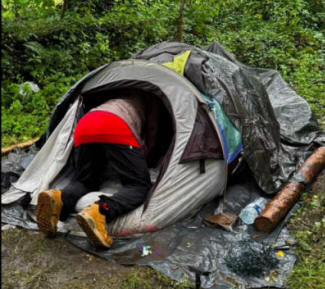 When it comes to the growing homelessness problem in Owen
Sound, public opinion appears increasingly divided between two opposing camps:
one demanding the removal of the homeless from the community, and another
focused solely on compassion and support services. Yet both groups ultimately
want the same outcome — fewer people living on Owen Sound’s streets. This
editorial proposes practical solutions aimed at achieving that common goal.
When it comes to the growing homelessness problem in Owen
Sound, public opinion appears increasingly divided between two opposing camps:
one demanding the removal of the homeless from the community, and another
focused solely on compassion and support services. Yet both groups ultimately
want the same outcome — fewer people living on Owen Sound’s streets. This
editorial proposes practical solutions aimed at achieving that common goal.
Introduction
Owen Sound stands at a crossroads. For decades, the city
has struggled with economic stagnation. Despite its natural beauty, strong
healthcare sector, and proud industrial history, the population has remained
largely unchanged for more than fifty years while economic opportunities have
steadily declined. The manufacturing jobs that once sustained working families
disappeared generations ago. Today, many residents feel the city has lost both
momentum and direction.
At the same time, homelessness, addiction, visible street
disorder, and public safety concerns have increased dramatically. Downtown
businesses are struggling. Residents increasingly feel unsafe in public spaces.
Taxpayers are frustrated by rising costs and declining results. Confidence in
municipal leadership is eroding.
Yet despite mounting public concern, local policy continues
to treat homelessness as though it were a single issue with a single solution.
It is not.
Owen Sound is facing two distinct crises:
1.
People who are economically unhoused and actively seeking
stability; and
2.
People suffering from severe addiction and chronic instability
who often reject treatment, structured housing, and accountability.
These groups require fundamentally different responses.
Treating them as one problem has guaranteed failure. We can no longer afford
policies rooted in denial, political caution, or symbolic gestures. Owen Sound
needs practical leadership grounded in compassion, accountability, measurable
outcomes, and fiscal responsibility, if we are to restore downtown safety.
The notion that chronic homelessness cannot be reduced is
simply untrue. Too often, community leaders shift responsibility to the county
or province in an effort to deflect growing public frustration over the loss of
safe, accessible public spaces. Yet the evidence shows that meaningful progress
is possible when local leadership is willing to act decisively. The small
Alberta city of Medicine Hat, with a population of roughly 60,000, demonstrated
exactly that by virtually eliminating chronic homelessness over the course of a
decade through focused leadership, coordinated services, and a clear commitment
to measurable results
Medicine Hat Proved Change Is Possible
Medicine Hat became the first Canadian city to
significantly reduce chronic homelessness through a coordinated
“Housing First” strategy combined with treatment supports,
accountability, and measurable performance targets.
Their results were substantial:
·
A dramatic reduction in chronic homelessness between 2009 and
2019;
·
Faster placement into stable housing;
·
Lower emergency service and policing costs; and
·
Better coordination between healthcare, housing providers, law
enforcement, and social agencies.
Medicine Hat succeeded because it refused to normalize
disorder or accept permanent street homelessness as inevitable. The city
established clear expectations, coordinated services, measured outcomes, and
focused relentlessly on helping people move toward stability and independence.
Owen Sound can do the same — but only if it is willing to
confront reality honestly.
Two Problems — Two Solutions
1.
 The
Economically Unhoused
The
Economically Unhoused
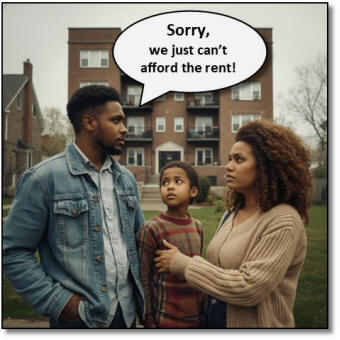
Many people experiencing
homelessness are victims of economic forces largely beyond their control: rising
rents, inflation, low wages, mental health challenges, family breakdown, and a
severe shortage of affordable housing.
For these individuals, housing
is the solution. Most do not want to live on the streets. They want stability,
safety, employment, and a chance to rebuild their lives. They need: affordable
housing, rent supports, employment assistance and pathways back to independence.
Helping these individuals regain stability is both compassionate and
economically responsible.
2. The Chronically Addicted Street
Population
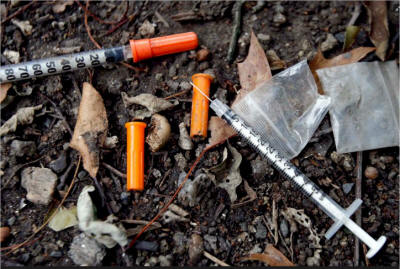 A second population consists of
individuals suffering from severe addiction and chronic instability who often
refuse treatment, reject structured housing, and remain trapped in cycles of
substance abuse, criminality, and public disorder.
A second population consists of
individuals suffering from severe addiction and chronic instability who often
refuse treatment, reject structured housing, and remain trapped in cycles of
substance abuse, criminality, and public disorder.
This problem cannot be solved
through unlimited tolerance or endless enabling. Compassion without
accountability has failed both the addicted individual and the broader
community.
Public spaces cannot continue
functioning as open-air drug markets and encampments while residents,
businesses, seniors, families, and visitors are expected to simply tolerate
worsening disorder.
Real compassion means helping
people recover — not abandoning them to addiction in parks, sidewalks, alleys,
and encampments.
Housing Solutions for the Economically Unhoused
A Bold Housing Strategy for a Small Town
Owen Sound cannot claim financial helplessness while tens
of millions of dollars in artwork remain protected in climate-controlled storage
as vulnerable residents sleep in tents, shelters, vehicles, and unsafe temporary
accommodations.
The art collection is a community asset that has been
accumulated over many years. Today it is estimated to have a value of
approximately $30 million. If liquidated and invested into a professionally
managed housing endowment fund, those proceeds could conservatively generate
millions of dollars annually to support affordable housing initiatives — without
increasing taxes.
This is not an attack on art or culture. It is a question
of priorities.
To put this issue into perspective, imagine a temporarily
unemployed father of five with no money to feed his children, while a recently
purchased luxury vehicle worth $130,000 sits in the driveway — bought with an
inheritance because his spouse had always dreamed of owning it. Most people
would recognize the obvious solution immediately: sell the luxury asset to meet
essential needs.
Owen Sound now faces a similar decision.
A community that allows people to sleep outdoors while
protecting a multimillion-dollar art vault has lost sight of its most basic
responsibilities. Paintings, however valuable, cannot take precedence over safe
shelter, public safety, human dignity, and community stability.
The responsible and compassionate solution is clear:
convert dormant luxury assets into a permanent housing endowment capable of
funding affordable housing initiatives for generations.
·
Those annual revenues could be used to:
·
Incentivize construction of affordable apartments;
·
Support rent supplements for low-income residents;
·
Convert vacant or underused buildings into housing;
·
Partner with non-profit housing providers;
·
Create transitional housing for working individuals, seniors, and
families in crisis.
This approach would transform passive assets into active
community infrastructure — turning stored wealth into measurable social impact
while protecting taxpayers from continual financial escalation.
Addiction Recovery, Enforcement, and Public Order
Addiction is a health issue
— but public disorder is a public policy issue.
Addiction will not be solved through tolerance alone. Owen
Sound must take a leadership role in expanding access to detoxification and
rehabilitation programs, increasing recovery-oriented supportive housing, and
working in close partnership with healthcare providers, the county, and
provincial agencies. While the county has an important role to play, municipal
leadership cannot simply shift responsibility elsewhere and hope the problem
resolves itself. Our municipal council has a duty to lead, coordinate, and drive
real solutions that protect both vulnerable individuals and the broader
community.
Public parks, sidewalks, and downtown streets cannot remain
open-air drug zones. Existing bylaws and laws must be consistently enforced.
Illegal encampments, shopping cart theft, public drug use, and chronic disorder
cannot simply be ignored. Council must work with prosecutors to ensure all
crimes, regardless of magnitude, are prosecuted to the full extent of the law.
The objective is not cruelty. The objective is to stop
enabling destructive behaviour while encouraging recovery, personal
responsibility, and reintegration into society. Addicts will choose the path of
least resistance — the city needs to ensure that that path involves recovery and
rehabilitation.
A compassionate city must protect both vulnerable
individuals and the broader public.
Owen Sound should work with the county to expand access to:
·
Detoxification services;
·
Rehabilitation programs;
·
Recovery-oriented supportive housing;
·
Mental health treatment;
·
Partnerships with healthcare providers and provincial agencies.
When someone in active addiction chooses the path to
recovery, the necessary resources must be readily available — any delay in
providing help could jeopardize recovery.
Harm Reduction: Saving Lives While Recovery Systems
Expand
Owen Sound cannot ignore the reality that people are dying
from overdoses today.
A tightly controlled safe injection site should be
established on a three-year trial basis as an emergency harm-reduction measure
while long-term recovery and housing strategies are implemented. The purpose is
not to normalize addiction, but to save lives, reduce public drug use, remove
needles from parks and sidewalks, and connect addicts with healthcare
professionals and treatment services.
Such a facility would also
move drug activity away from public spaces and provide frontline workers with
daily opportunities to encourage detox, rehabilitation, mental health treatment,
and recovery.
At the conclusion of the
three-year trial, the program should be independently evaluated based on
measurable outcomes, including: the number of overdose deaths, crime statistics,
and the number of public disorder complaints.
Any decision regarding continuation should be based on evidence and results —
not ideology.
Fiscal Responsibility and Public Priorities
Owen Sound taxpayers are already under immense financial
pressure. We cannot continue spending on strategies that fail to reduce
homelessness, addiction, or disorder while public confidence continues to
decline.
Our municipal council must refocus on core
responsibilities, most importantly: housing, public safety, and clean and safe
public spaces.
Hard decisions are unavoidable. Leadership is not measured
by avoiding controversy. Leadership is measured by the willingness to confront
difficult realities honestly and act decisively in the public interest.
A Call for Courageous Leadership
The future of Owen Sound will not be decided by slogans,
studies, or symbolic gestures.
It will be decided by whether leaders have the courage to
acknowledge that current approaches are failing — and the determination to
pursue practical reform.
Owen Sound deserves leadership that confronts reality with
honesty, protects public spaces, supports people who are working to rebuild
their lives, demands real accountability, and restores pride, safety, and
confidence throughout the community.
This fall’s municipal election represents more than a
routine political contest. It is a referendum on the future direction of Owen
Sound. Residents must decide whether the city will continue managing decline —
or begin rebuilding order, safety, accountability, economic opportunity, and
hope.
Download this Paper:
End Homelessness