 Introduction
Investing in Public Transit
How We can Build a More Affordable Transportation System
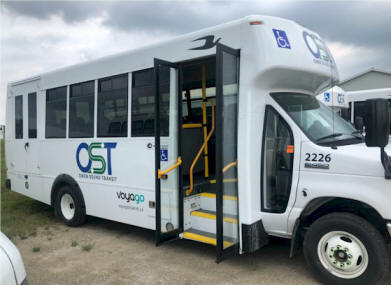
IntroductionThe City of Owen Sound budgeted $1.3 million in 2026 to operate our public transit system. Past Community Satisfaction Survey results indicated that only 6.5% of residents use transit frequently, while 72.5% report never using the service.
Some may interpret these figures as evidence that transit should be reduced. However, experience from municipalities across Canada and the United States suggests the opposite conclusion.
Transit ridership is largely a reflection of service quality. When buses are infrequent, inconvenient, and disconnected from major destinations, residents choose other transportation options. When service becomes more frequent, reliable, and responsive to community needs, ridership increases dramatically.
This paper examines how other small communities have improved transit performance and outlines practical recommendations for Owen Sound to increase ridership while reducing the long-term taxpayer subsidy per passenger.
Owen Sound's transit system faces a classic challenge common to many small municipalities. The system currently operates with relatively low frequency. For many residents, particularly those commuting to work, attending school, or travelling between appointments, transit is not a practical option.
A worker who misses a bus may wait 30 minutes or longer for the next one. A student attending Georgian College or local high schools may find schedules do not align with class times. Seniors may struggle with long waits during winter months.
The result is predictable:
· Low ridership
· High subsidy per passenger
· Public perception that transit is underutilized
· Pressure to reduce investment
Unfortunately, cutting service generally worsens the problem.
One of the most significant transit success stories in North America occurred in the city of Houston, Texas. Rather than adding more routes, Houston redesigned its system around higher-frequency service. The city focused resources on routes where people actually travelled.
The result was substantial ridership growth despite operating within existing financial constraints.
The lesson is simple:
People use transit when it becomes convenient.
A bus every 15 minutes is fundamentally different from a bus every 30 or 60 minutes.
Medicine Hat has a population of approximately 65,000 and faces many of the same challenges as smaller Ontario communities. Several years ago, the city redesigned routes to improve direct connections between major destinations such as employment areas, shopping districts, schools, and medical facilities.
Ridership increased because transit became more useful rather than simply more available. The key lesson was that route design matters as much as funding levels.
Belleville has invested consistently in transit modernization, including:
· Improved scheduling
· Better passenger information
· Enhanced bus stop infrastructure
· Integration with major employment and educational destinations
The city recognized that transit is an economic development tool rather than merely a social service.
Today, transit supports workforce participation and student mobility throughout the community.
Although larger than Owen Sound, Kingston provides an important example. Kingston significantly increased ridership through partnerships with post-secondary institutions. Student transit passes became part of tuition fees, creating a large and stable ridership base.
Students quickly became regular transit users, generating revenue while reducing automobile congestion. Many of these students continued using transit after graduation.
Owen Sound may be overlooking one of its largest potential transit markets.
Students:
· Travel on predictable schedules
· Often do not own vehicles
· Require transportation to school, work, recreation, and shopping
· Can become lifelong transit users
The City should pursue discussions with:
· Bluewater District School Board
· Bruce-Grey Catholic District School Board
· Georgian College
Potential programs include:
A modest annual fee included in student fees could provide unlimited transit access.
Benefits include:
· Guaranteed transit revenue
· Higher ridership
· Reduced parking demand
· Reduced traffic congestion around schools
Communities such as Kingston, Guelph, Waterloo, and London have successfully increased ridership through discounted student pass programs.
Not every route needs higher frequency. Instead, Owen Sound should identify key corridors such as:
· Georgian College
· Downtown
· Brightshores Hospital
· Industrial employment areas
· Major shopping areas, including Georgian Bluffs
· High-density residential neighbourhoods
Resources should be concentrated on routes with the greatest potential demand. A frequent transit network often attracts more riders than a larger but less reliable network.
Several small municipalities have replaced underused fixed routes with on-demand transit services.
Examples include communities in Alberta, Saskatchewan, and Ontario that now use smartphone or telephone booking systems.
Instead of running large buses on nearly empty routes, smaller vehicles respond to passenger requests.
Benefits include:
· Lower operating costs
· Better service coverage
· Reduced fuel consumption
· Higher customer satisfaction
Owen Sound could maintain frequent service on major corridors while using microtransit to serve lower-density neighbourhoods.
Research consistently shows that convenience drives ridership.
Potential improvements include:
Real-Time Bus Tracking
Passengers are far more likely to use transit when they know exactly when the bus will arrive.
Mobile Payment
Simple electronic payment systems reduce barriers to use.
Better Shelters
Comfortable shelters improve the passenger experience, particularly during winter.
Employer Transit Partnerships
The City should work with major employers to provide discounted transit passes. Many communities have successfully increased ridership by allowing employers to purchase passes at reduced rates for their employees.
Transit should not be viewed solely as a transportation service.
It is also:
· A workforce development tool
· A poverty reduction tool
· A senior mobility program
· A student transportation system
· An environmental investment
· An economic development asset
Employers cannot fill jobs if workers cannot reach them. Low-income workers can’t pay the rent if they can’t get to work. Seniors become increasingly isolated when transportation options are limited.
The costs of inadequate transit frequently appear elsewhere in Municipal/County/Provincial budgets.
Council should focus on reducing subsidy per passenger rather than simply reducing transit spending.
For example:
If transit spending increases by $300,000 but ridership doubles, the cost per passenger declines significantly.
The goal should be to maximize the value received from each transit dollar invested. Successful transit systems are rarely judged solely on cost. They are evaluated based on the mobility and economic benefits they provide.
1. Develop a five-year Transit Growth Strategy focused on increasing ridership rather than reducing service.
2. Establish partnerships with Georgian College and local school boards to provide discounted or universal student transit passes.
3. Increase frequency on key routes serving employment centres, schools, downtown, and healthcare facilities.
4. Convert low-ridership routes to on-demand microtransit service.
5. Implement real-time bus tracking and mobile fare payment technology.
6. Create employer transit-pass partnerships with major local employers.
7. Measure success using ridership growth and subsidy-per-passenger metrics.
8. Set a goal of doubling transit ridership within five years.
The Community Satisfaction Survey reveals a significant challenge: most Owen Sound residents do not currently use transit. However, this should not be interpreted as a reason to reduce investment.
Instead, it should be viewed as evidence that the current service model is failing to meet residents' needs.
Communities across North America have demonstrated that ridership can increase substantially when transit becomes more convenient, more reliable, and more closely aligned with how people actually travel.
The choice facing Council is straightforward. Owen Sound can continue operating a system that few residents use, or it can invest strategically to build a transit network that supports workers, students, seniors, businesses, and future economic growth.
The most successful municipalities have chosen the latter path. Owen Sound should do the same.
Download this Paper: Investing in Transit
What Do You Think? |